OpenDubsBest example
Optical flow odometry, checked against mocap
- Code I wrote
- 2,076 lines
- Language
- C++, Python
- Tools
- micro-ROS, ArduPilot
- Hardware
- Pixhawk, M5Stack
- Role
- Solo
- Status
- Retired
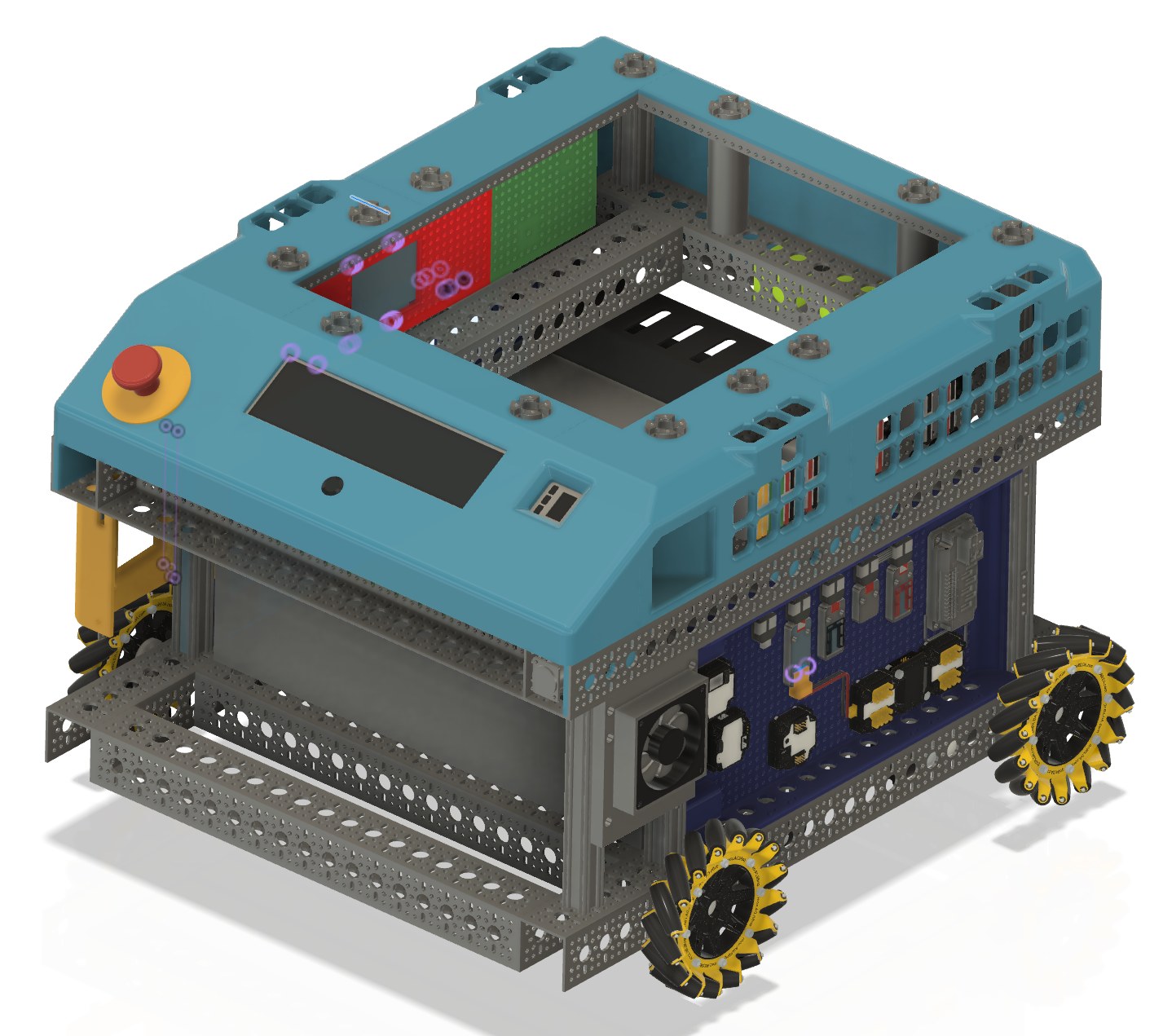
Before the base could navigate, it had to know where it was. The first source was optical flow: a sensor that watches the floor slide past. I brought it up over micro-ROS and fed it into ArduPilot's EKF alongside the IMU of the Pixhawk the base ran at the time. It only read sensibly within about 10 cm of the floor, so it sits low, lit by its own LED.
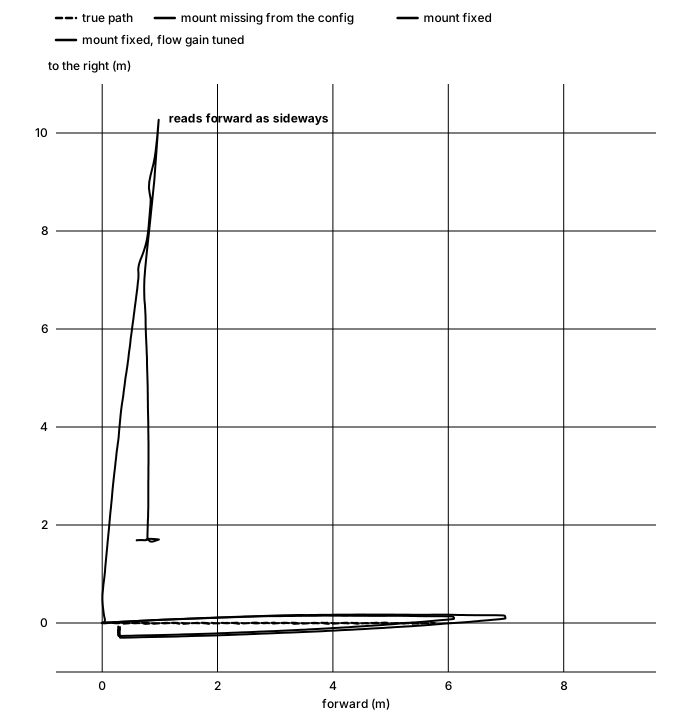
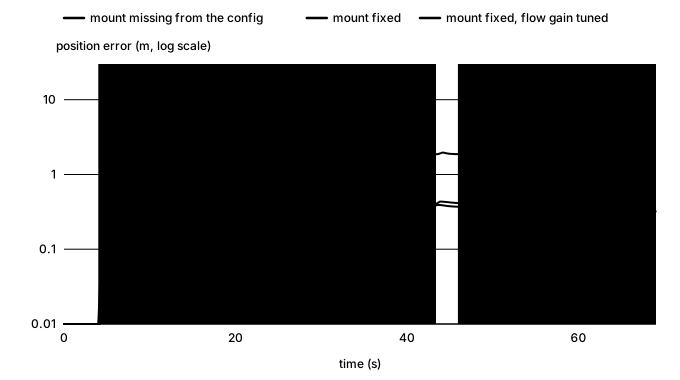
To tell whether it worked, I needed ground truth. The lab's motion capture tracks the robot more precisely than anything you could measure by hand, so I wrote the package that brings it into ROS: the EKF's estimate and the mocap pose land in one bag on one clock, and every run can be compared with the truth point by point. The first runs showed why that mattered: driving 5.5 m, the estimate stayed within 0.74 m of mocap, but spinning in place sent it 155 m off. Once teammates found the sensor's mounting missing from the config, I tuned the flow gain against mocap, run by run, until the estimate stayed within 5 mm of motion capture.